Training commercial cleaners: induction that still works on night two
Site maps, chemicals, security and language. A buddy shift is not a course. CAF and the Award ask whether the labour is real. Refreshers have to survive a roster, not a January toolbox talk.
By Priya Raman · Operations writer · 11 February 2025 · Updated 30 January 2026
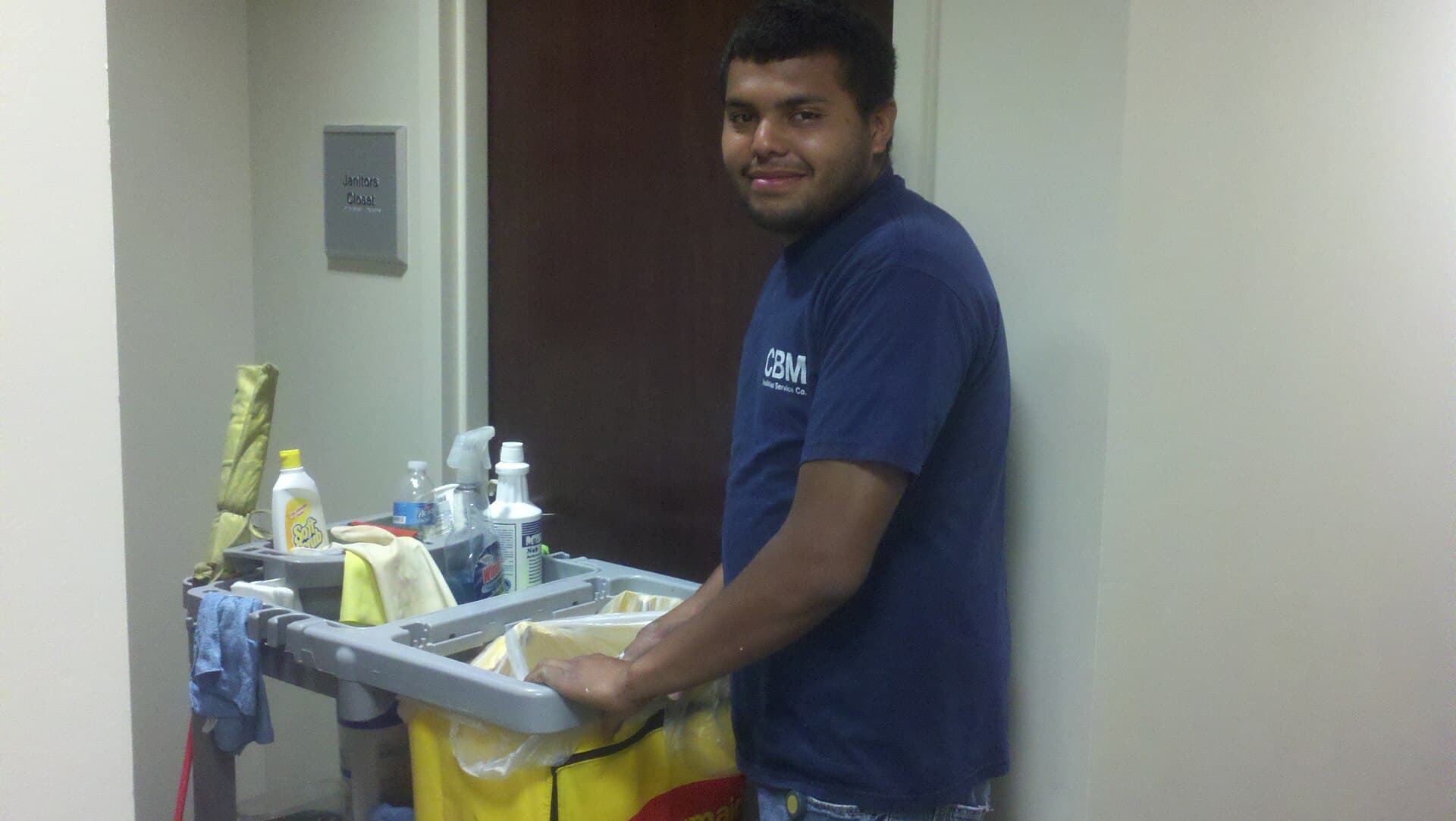
Most commercial cleaners in Australia are inducted twice. The first time is a classroom or a tablet: policies, a video, a signature. The second time is night two, when the buddy is on another floor and the leading hand is in a different tower. That is the induction that decides whether the microwave is done, the alarm is set, and the red cloth stays out of the kitchen. A contract that only funds the first sitting will look trained in a tender and untrained on the floor.
This sits in the operations and people hub because induction is a roster problem as much as a content problem. We are not a registered training organisation. We are here to say what a new starter still needs when the building is empty.
Night two is the induction
Night one is theatre even when it is honest. Someone walks the floor with the new starter. Doors open. The store is explained. The alarm is pointed at. The new starter nods. Fatigue has not arrived yet, and neither has the locked meeting room that was not on the tour.
Night two is the job. The buddy is thin. The card misfires. A function has left the boardroom late. The product on the trolley is not the product on the wall chart. If the induction was a signature, this is where the building learns it.
Design for that night. A one-page site sheet the cleaner keeps: room names that match the doors, store and sink, chemical list, waste bay, egress, who to phone, what not to unplug. A buddy who is rostered, not hoped for. A leading hand who asks three practical questions at the start of night two, not “are you right?”. If they cannot answer where the parents’ room is, or which cloth does the bowl, they are not inducted. They are present.
Site maps a relief cleaner can use
The map is not a glossy floor plan from the leasing brochure. It is a document that uses the same room names as the access-control system, the fire board and the specification. “Marketing west” is useless if the swipe reader says L14 West. Mark the cleaners’ store, the slop hopper, the waste bay, the rooms that stay locked, the rooms that have standalone alarms, and the tea points that look like cupboards.
Give the map to the person who will be alone. Laminate it if you must, but keep a copy that can be updated after a fit-out. A map that still shows a paper plan room that is now a parents’ room will be cleaned as a paper plan room. Relief staff need this more than permanents. The permanent has walked the mistake. The relief has not.
Photographs beat paragraphs. The alarm panel, the card reader that fails, the shelf where the SDS folder lives, the colour-coded cloths, the bin that is organics and looks like landfill. If you use pictograms, use the same ones on the wall and in the pack. Do not run a legal induction and a laminated “crew version” that disagree.
Chemical, SDS and the bottle that is not on the sheet
Chemical induction is not a general warning about not drinking the product. It is this range, this dilution, this surface, this PPE, and the SDS in a language the person can use. Safe Work Australia’s model WHS framework still expects a person conducting a business or undertaking to give workers information they can act on. A folder of English-only sheets for a crew that briefs in another language is a consultation failure dressed as compliance.
Walk the store. Match the bottle to the sheet. Show the dosing, not only the poster. Say what is never mixed. Say what is never decanted into a milk bottle. Say what to do when the specified product is missing — leave the task, phone the leading hand, or use the named substitute. Silence is how a solvent appears on night two.
We go into the paperwork in hazardous chemicals and SDS for cleaning teams. The induction point is simpler: if they cannot find the SDS, they cannot use the product. If the product on the trolley is not in the folder, stop the task.
A disinfectant with a dwell time needs the minutes said out loud. “Spray and wipe” is how you buy a scent and not a contact time.
Security, cards and the alarm you should not invent
After-hours cleaners are asked to be cleaners and, too often, junior security. Cards, PINs, alarm setting, locked suites, and the last person out are part of the attend. They are not a footnote.
Induct them as security tasks. Which doors they may open. Which they may not. What to do when a card fails — not “try the one on the cupboard door”. How to make a floor alarm-ready if that is in the specification, and how to leave if it is not. Who holds the after-hours phone. What to do if they find someone on the floor who should not be there. The answer is not to argue with a stranger in a stair.
Cards expire. Relief staff inherit cards that still open last year’s tenancy. PINs get written inside a cupboard. These are findings, not tips. A cleaner who cannot get in cannot clean; a cleaner who cannot get out is a different emergency.
Do not ask a new starter to disable a detector, prop a fire door, or stay after the agreed egress so a supervisor can finish a story. Model WHS duties do not pause for a walkthrough. The broader duty picture is in WHS duties for cleaning contractors.
Language, buddy shifts and who talks
A large share of the commercial cleaning workforce speaks English as a second or third language. That is a labour-market fact, not a courtesy paragraph. Induction that only works in fast, idiomatic English will produce a signed form and a confused night two.
Use short sentences. Room name, task, photograph. Demonstrate. Ask the person to show you, not to agree with you. If two languages are in regular use on the crew, budget for a translated site sheet. If you do not budget for it, it will not exist in month eleven.
A buddy shift is a rostered person, on the same floor, who knows they are the buddy. It is not “follow Maria” when Maria is already covering two levels. Pay the time. Two people on a floor for the first nights is a cost. One person lost in a comms corridor is a different one.
Who talks matters. A leading hand who can take a question without humiliation will hear about the broken lock. A stairwell briefing at speed will hear nothing. If the supervisor’s English and the cleaner’s English do not meet, do not pretend a toolbox talk fixed it.
CAF, the Award and what “trained” means in a tender
The Cleaning Accountability Framework is the Australian scheme buyers reach for when they want labour standards on a site to be more than a policy. It is not a substitute for site induction. It asks whether the hours, the pay and the supervision are real enough that training could take hold. A site that is under-hours will induct in the abstract and cut corners in the concrete.
The Cleaning Services Award 2020 will not write your induction pack. It will decide whether the buddy hour is paid, whether a casual minimum applies to the person you brought in for a “quick look”, and whether a meeting before the shift is ordinary time or a fantasy. If the price does not contain the induction, the induction will be a signature in a lunch room.
Tender language that says “all staff trained” without saying in what, by whom, and how often, will be answered with a corporate matrix. Ask to see the site sheet. Ask who buddied the last new starter. Ask what happened on their night two. Night-shift fatigue and safety is the other half of this: a trained person who has already worked a school that afternoon is not the same resource as the matrix implies.
Refreshers that are not a toolbox talk in January
Induction rots. Fit-outs move walls. Products change. Cards get recoded. A new disinfectant arrives with a different dwell time. The person who was inducted in March is doing a different building in September, even if the street address is the same.
Put refreshers on a calendar that matches change, not only a year. New chemical: same week. New alarm: before the weekend. New room: before it soils. A January toolbox talk about “standards” is how you keep a file. A ten-minute stand-up at the store shelf when the product changes is how you keep a method.
Inspect training the way you inspect a floor. Ask a relief cleaner to find the SDS, the parents’ room and the waste stream for spent pads. If they cannot, the induction failed, regardless of the signature. Record the close, not only the sit.
Do not use a refresher as disciplinary theatre. If the same three rooms fail, open the hours, the access and the specification. Retraining a person who was never given a key is how contractors look busy.
What buyers should ask to see
Buyers do not need to sit every induction. They need to stop accepting a PDF as a crew.
Ask for the site sheet and the map, and check the room names against the specification. Ask how many buddy shifts are in the price, which languages the pack exists in, and how a relief cleaner gets a card at 8pm on a Monday. Ask what CAF or labour evidence they will show, and do not confuse it with a chemical briefing.
If you want a test, meet a person on their second night and walk two rooms. Ask them to brief you as if you were the next new starter. If they can do it, the induction worked. If they cannot, the tender’s training schedule was a wish. Night two is the first night the building is honest about whether anyone was taught.
Questions readers send us
- Is a signed induction form enough evidence of training?
- It is evidence that someone signed a form. It is not evidence they can find the parents’ room, dilute a product or set an alarm. Keep the signature. Add a buddy sign-off and a short practical check on night two. If you only file the form, you have a liability file, not a crew.
- How long should a site induction take?
- Long enough to walk the floor, the store, the chemical list, the waste bay and the egress, and short enough that a tired person still hears it. A two-hour PowerPoint in a language the cleaner does not use is not longer training. It is a longer sit. The walk is the induction.
- Does CAF replace our own induction?
- No. The Cleaning Accountability Framework looks at whether labour standards on a site are real. It does not teach this building’s alarm or this tea-point chemical. Use CAF for what it is. Still induct the person onto the floor they will clean.
Continue in Operations and people
Building a relief roster that does not collapse on Monday morning
Casual pools are not a system. Award minimums decide whether a two-hour gap is fillable. Multi-site jumping and sick season take the rest. Buyers should specify relief hours, not hope.
Priya Raman · 2 September 2025
Auto-scrubbers, vacuums and when to lease the fleet
Capex versus opex, battery versus cable, and the Friday-night machine that has no spare. Who owns the kit on a contract decides who waits. Filters and training are the real lease conditions.
Priya Raman · 29 July 2025

Night-shift cleaning: fatigue, safety and the quality that vanishes at 2am
Body clocks, lone work and alarms. The last floors get the leftover attention. Transport home is a WHS question. Award night penalties pay for the hour; they do not make it safe.
Priya Raman · 13 May 2025